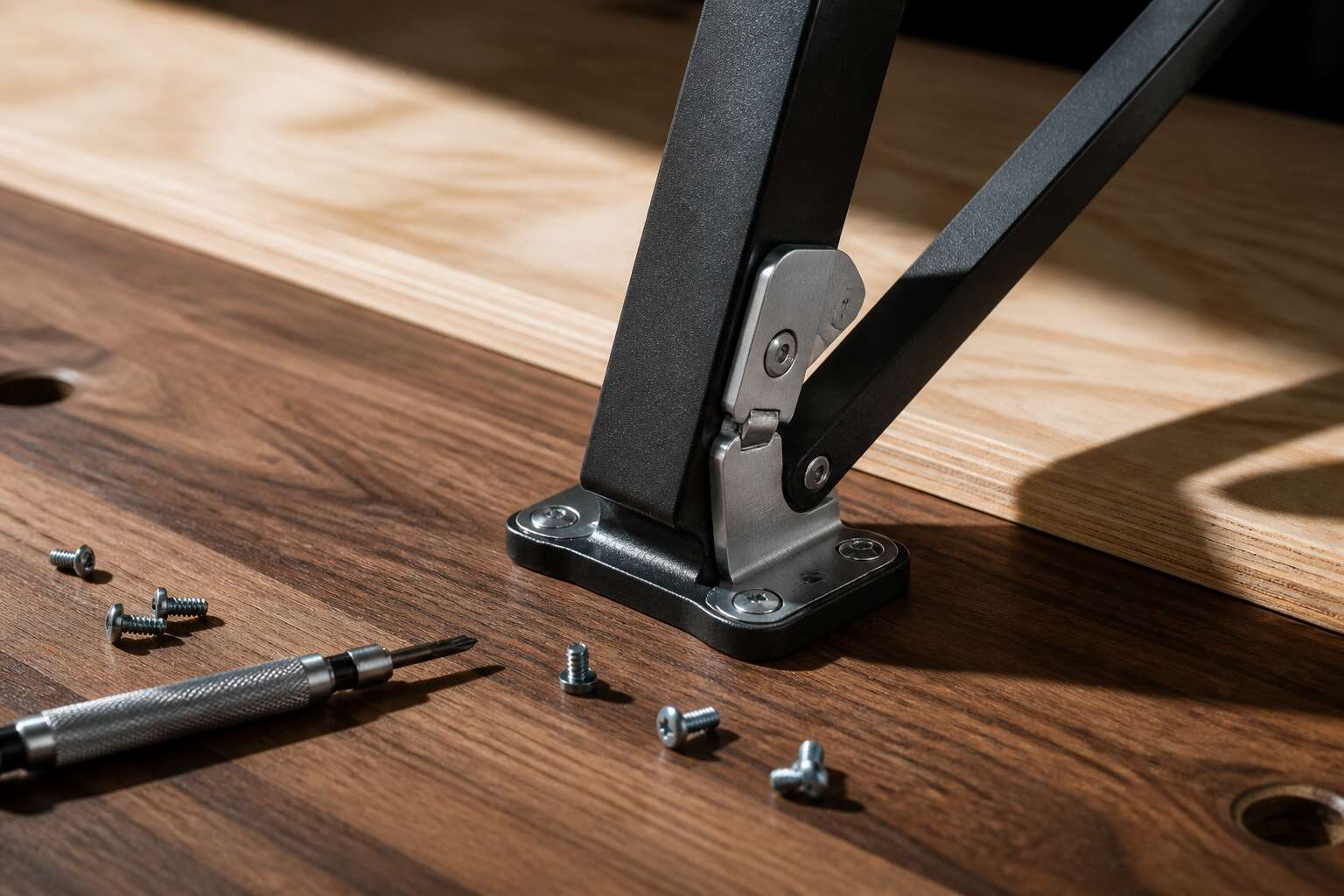
Assessing Your Table’s Current Condition
Signs of Wear and Tear to Look For
Folding tables deteriorate unevenly. The hinges bear the brunt of heavy use, and locking mechanisms often fail long before the tabletop reveals visible damage. When assessing your table’s condition, look beyond surface scratches and focus on structural integrity.
Signs of wear to inspect:
- Corrosion around hinge points, particularly if the table has faced humid coastal air
- Bent or buckled leg channels that no longer align with their locking pins
- Cracked welds or stress fractures near the attachment brackets
- Excessive play in the legs when the table is fully opened
These indicators confirm the original hardware has reached the end of its service life. Folding table replacement legs address the root cause of instability without discarding a perfectly good tabletop. The surrounding frame often remains sound even when the leg mechanisms fail, which makes assessing these specific trouble spots worthwhile.
Understanding Common Failure Points
A single South African venue can push a folding table through dozens of open and close movements every week. That wear does not show up on the tabletop. It forms inside the leg assembly, where the geometry starts to change. To assess your table’s current condition, open the table and place it on a flat hardness. Press the lower edge with your hand. If the leg flexes sideways under force, the attachment region is already compromised.
Common problems resolve down to the operating principle of the pivot. The leg swings on a single pin, and that pin takes all the emotional torque from each fold. The hole around the pin expands over time, then the whole table loses its square shape. That is the stage where folding table replacement legs become the only competent fix. Match the old leg’s barrel and spacing, and the repair will hold steady. The main failure points to inspect are:
1. The rotation of the pivot feels rough when the leg is turned.
2. The leg shows lateral movement at the top attachment.
3. The crossbar flexes when the table is fully folded.
Measuring Your Existing Leg Setup
Inspection tells you a leg is failing. Measurement tells you how to fix it. I reach for a steel rule and caliper first, because guessing at dimensions turns a repair into a frustrating exercise.
Your measurements determine which folding table replacement legs will fit without further modification. Start with the leg length from pivot centre to foot. Then record the barrel width, the cylindrical housing that holds the pin. The pin’s own diameter matters too, as does the distance between the two mounting points on the table underside.
- Measure the leg tube’s outer width and wall thickness.
- Measure the pivot pin diameter and the barrel’s internal clearance.
- Measure the folded height to confirm clearance beneath the tabletop.
Write each figure down. Compare them against local supplier specifications before ordering folding table replacement legs, and the swap becomes routine. Those numbers save you from a second failed purchase!
Determining Whether Repair or Replacement Is Best
Ten years of church bazaars and cattle auctions will test a folding table more than a lifetime of stationary furniture. I have swapped legs on tables that outlasted the rooms they stood in. The real question is whether new hardware can earn another decade.
Assess the tabletop’s flatness first. Press down on each corner and watch the frame react. If the top is delaminating or the frame twists under light pressure, new legs will not fix the core problem. Check the locking mechanism on the brace as well.
Before you order folding table replacement legs, weigh these factors:
- The frame’s overall rigidity, not just the joints that wobble.
- The tabletop’s surface condition and moisture damage.
- Whether spare parts are available locally without long delays.
New folding table replacement legs make sense when the tabletop stays flat and the frame holds square. A frame that racks and a top that bows will defeat even the finest new hardware.
Selecting the Appropriate Leg Style
Comparing Straight, Tapered, and X-Frame Designs
Material Options: Steel, Aluminum, and Plastic
There is a common misconception that all folding table replacement legs are created equal, but the material choice dictates everything from weight to lifespan. Steel is the workhorse, offering maximum stability for heavy-duty use, though you will feel every kilogram when lugging it to a storage room. Aluminum is the featherweight champion, but you pay a premium for that lightness and its natural resistance to rust. Plastic is the budget-friendly option, yet it is often the first to crack under pressure, especially in the unforgiving South African heat. Your specific application should dictate the alloy you choose.
Consider the environment where your table operates. A venue that hosts weekly events will need the durability of steel, while a mobile catering business will curse a heavy frame every single day. The trade-off is simple:
– Steel: ultimate strength and load capacity, but heavier and requires paint or powder coating to prevent corrosion.
– Aluminum: light and corrosion-resistant, ideal for portable setups, but generally more expensive per unit.
– Plastic: cheapest upfront cost, perfect for light indoor use, but prone to becoming brittle and snapping.
Your choice of material for folding table replacement legs is not a one-time decision, it is a long-term logistical commitment. Investing in a high-quality aluminium set can save your back and your schedule, while a cheaper steel option might leave you wrestling with rust spots before the year is out. Match the leg material to the punishment you expect it to endure, not just the price tag.
Adjustable vs. Fixed Height Mechanisms
Adjustable legs sound like a wonderful idea until you realise they add a few moving parts to a product that was already perfectly happy staying still. A fixed height leg is a stubborn, reliable friend. It does one thing, and it does it well. An adjustable mechanism, by contrast, introduces sliding collars, pins, or twist locks that can bind, strip, or simply rattle loose at the worst possible moment. For the average South African braai table or weekend market stall, fixed is often the smarter choice. However, if your folding table replacement legs must accommodate uneven pavements or a venue with a sloping floor, the adjustable route saves you from shoving a matchbox under one corner.
- Fixed: lighter, cheaper, fewer things to break.
- Adjustable: adaptable to uneven ground, but heavier and more temperamental.
The decision ultimately comes down to your tolerance for fiddliness. And nobody has ever described a wobbly table as charming.
Compatibility with Different Table Tops
Nobody buys a tabletop for its legs. Yet the folding table replacement legs you choose determine whether that top remains level, whether it topples under a heavy load, and whether the thing collapses at a braai. Every top has its own mounting reality. A thick wooden top sits comfortably on a straight leg with a flat bracket. A thin aluminium top demands a wide spreader plate, or the hardware will poke through.
- Hollow-core doors need legs with a large footprint to avoid crushing the inside structure.
- Steel tops pair best with locking-angle legs.
- Timber frames tolerate a simpler bolt-through mount.
Check the bolt pattern on your existing top before buying folding table replacement legs. Tops built for one manufacturer rarely accept another’s hardware without additional drilling, which weakens the surface. Choose the leg that respects what your top is made of, and it will reward you with stability.
Weight Capacity and Load Ratings Explained
When a table collapses mid-braai, the cause usually traces back to mismatched leg strength. Guests blame the weight of the potato salad, but the real culprit is an outdated load calculation. Folding table replacement legs are not one-size-fits-all supports. Their rated capacity dictates how much stress the frame can absorb before the locking mechanism gives way.
Weight ratings are the silent contract between your tabletop and the floor. A leg rated for 50 kilograms will fail silently under a 70-kilogram centrepiece, and that failure often happens at the hinge, not the base. The numbers stamped on the bracket matter far more than the gauge of the steel. When you start shopping, look for legs with a stated working load, not just a maximum breaking point. The working load is the safe zone; the breaking point is the tragedy waiting to happen.
Steel and aluminum offer different trade-offs in this equation. Steel legs handle higher static loads, making them ideal for permanent setups in a workshop or garage. Aluminum legs are lighter and resist corrosion better, which suits coastal homes, but they require a thicker wall thickness to match steel’s capacity. If you are replacing legs on a heavy oak door used as a desk, aluminium might flex under the weight. If you are building a lightweight trestle table for outdoor events, steel becomes overkill and adds unnecessary strain to the folding mechanism.
Calculating the right capacity involves a quick formula. Take the total weight of the tabletop and everything that will sit on it, then divide that number by the number of legs. Add a 25 percent safety margin. This cushion accounts for leaning, shifting loads, and the occasional guest who uses the table edge to push themselves up.
1. Measure the tabletop’s empty weight.
2. Add the heaviest realistic load (stacked plates, a full cooler, a laptop).
3. Divide the total by the number of legs.
4. Multiply the result by 1.25 to find the minimum working load per leg.
The mounting pattern on your tabletop also affects load distribution. A leg bolted through four points spreads stress evenly. A leg attached with two screws forces the entire load onto a smaller surface, which can crack a particleboard top. The same leg rated for 100 kilograms on a solid wood top will struggle on a hollow-core door because the mounting surface cannot transfer the force effectively. In this case, the leg is not the weakest link; the top is. Always match the leg’s bracket size to the thickness of your tabletop to keep the load path clean.
The bottom line is simple: the rating is the truth. Folding table replacement legs that look identical can have wildly different capacities based on wall thickness and hinge quality. Read the spec sheet, do the math, and buy legs that laugh at your heaviest load. That is the only way to keep the potato salad on the table and the conversation flowing.
Installation and Fitting Guidelines
Tools and Hardware You’ll Need
There is a moment of quiet intent when the old hardware finally gives way and the tabletop rests in your hands. That is where the real work begins. Installing folding table replacement legs is a task of precision, not brute force. Rushed work leads to stripped threads and wobbly surfaces, so approach the process with patience and a clear mind.
First, clear your workspace and lay the tabletop flat on a protected surface. You will want to remove the existing brackets and any residual bolts from the previous setup. Use a drill to create pilot holes if your new hardware demands it, as screwing directly into hardwood without a guide often splits the grain. For a smooth installation, gather the following tools before you start:
– A cordless drill with assorted drill bits
– A socket wrench or adjustable spanner
– A pencil and a straight edge for marking
– A rubber mallet for gentle persuasion
– Thread-locking fluid to secure the bolts
Once your pilot holes are marked and drilled, align the new brackets against the underside of the table. Secure them loosely at first, allowing for minor adjustments before you torque everything down. This is where most people fail; they tighten one side completely and leave the other side floating in space. Tighten the bolts in a cross pattern, working gradually to ensure even pressure across the mounting plate.
After the brackets are seated, attach the leg assemblies and test the folding mechanism a few times. A smooth hinge action indicates your alignment is correct. If you notice any binding or resistance, loosen the bolts slightly and reposition the bracket by a few millimetres. This iterative process, while tedious, prevents the frustration of a table that rocks on its feet. Finally, apply a drop of thread-locking fluid to each bolt to combat the vibrational loosening that comes from regular use, ensuring your folding table replacement legs remain stable for years of service.
Step-by-Step Mounting Techniques
Aligning for Balance and Levelness
Most floors are not level. Accept that fact before you install anything. Fitting folding table replacement legs on a sloping surface without adjustment is a recipe for a wobble that will ruin your coffee. Start by loosely mounting all four legs, then compress the frame slightly to seat the brackets evenly.
- Place a spirit level across the longest diagonal
- Check the opposite diagonal next
- Adjust the foot pads or add a shim under the lowest corner
Tighten the bolts in a crosswise pattern, a little at a time. Recheck the level after each round. This sequence keeps the frame square and prevents the table top from twisting against the hinge points.
Modifying Existing Brackets or Hinges
Most new folding table replacement legs arrive with hardware that almost fits. You might be tempted to force the bolts through, but I have seen that shortcut create stress fractures later. Instead, measure the existing bracket spacing against the new leg plate. Where they differ by a few millimetres, drilling fresh pilot holes works, provided you keep a minimum of two screw widths from the original edge.
Modifying hinges requires extra care. The hinge pin carries the full folding load. Check whether the replacement pin diameter matches your existing hinge barrel. If it does not, a bush or sleeve can bridge the difference without weakening the frame.
Before you commit:
– Test the folding action with the legs attached but not fully tightened.
– Confirm the locking mechanism engages cleanly on both sides.
– Look for any binding or catch that could strip the hinge over time.
A clean modification leaves folding table replacement legs operating smoothly for years.
Safety Tips for Securing Legs Firmly
A wobbly table undermines even the finest carpentry. In my experience, most installation failures trace back to rushed fastening rather than faulty parts. Before you introduce a single screw, check the floor for level. A slight slope will twist the frame and prevent the locking mechanism from seating properly. Ensure your substrate is solid, not just the surface layer. Use a spirit level across the folding table replacement legs. For high traffic areas, consider anti vibration washers.
Secure the hardware in a criss cross pattern. Tighten gradually. Torque specifications are rarely optional. Hand tighten all bolts first, then check the leg release action before applying the final quarter turn with your wrench.
I find it helps to mark the final position with a pencil. This way, you can spot any shift in alignment during the day. A small creak after installation usually indicates a gap you missed. Silence it now rather than later.
Troubleshooting Misaligned Holes
Maintenance and Longevity Tips
Routine Inspection and Tightening Schedules
Repeated tightening of fasteners is the quiet rhythm of a well maintained table. Most hardware failures occur not from a single dramatic event, but from the gradual loosening of bolts and screws over months of use. A folding table replacement legs system relies on compression and friction, and when those forces diminish, the entire structure begins to micro shift with every lean and bump. This movement accelerates wear on the hinge points and brackets. Establishing a regular inspection cadence is the single most effective way to extend the service life of your investment. For tables in daily commercial use, a weekly check is prudent, while a monthly assessment suits occasional home applications.
Consider the physical environment. South African summers bring high humidity, which can affect the integrity of certain metal alloys through corrosion at the connection points. A quick wipe down of the leg channels and a visual check for any surface oxidation should accompany your tightening routine.
– Examine each leg for visible rocking when pressure is applied to opposite corners.
– Feel along the underside of the table for any protruding screw heads that indicate stripped threads.
– Spray a light lubricant on the sliding mechanisms of adjustable feet to prevent seizing.
When you do tighten, work in a diagonal pattern to ensure even pressure distribution across the mounting plate. Over torquing a bolt is just as hazardous as leaving it loose, as it can strip the receiving hole or warp the bracket. The goal is a solid connection without distorting the metal. Additionally, pay attention to the floor contact points. Rubber feet wear down unevenly, which introduces a wobble that puts asymmetrical stress on the folding table replacement legs. Replacing these small rubber caps is an inexpensive task that prevents costly damage to the primary frame. With routine attention, these components will maintain their rigidity and structural integrity for years.
Cleaning and Rust Prevention Methods
A single gram of moisture can undo a year of proper assembly. Your folding table replacement legs live under constant assault from dust, spilled coffee, and the occasional bout of South African humidity. Clean them with a stiff nylon brush and a vacuum attachment to remove abrasive debris.
For rust prevention, coat the bare metal with a penetrating sealant, but avoid greasy products that turn your leg channels into a fly trap. Use a dry film lubricant instead. That slick coating repels water without leaving a tacky residue.
- Wipe down the legs monthly with a diluted vinegar solution.
- Rinse with clean water and dry immediately.
- Apply a rust inhibitor spray to high wear joints.
Check the rubber feet for embedded grit. Those tiny stones scratch the floor and accelerate corrosion at the base plate. A quick scrape with a flathead screwdriver works better than any fancy chemical.
Lubricating Moving Parts for Smooth Folding
A folding table with gritty hinges is a broken table waiting to happen. The legs bind, the frame twists, and suddenly your reliable surface becomes a hazard. Lubrication is the cheapest insurance you will ever buy for your folding table replacement legs.
Focus on the friction points. Apply a light machine oil to the pivot pins, cam locks, and spring assemblies. Work the mechanism ten times to distribute the product. South Africa’s dry Highveld winters are brutal on moving parts, while coastal humidity creates a different kind of corrosion problem. A dry PTFE spray is the best choice here because it handles both extremes.
Do not use heavy grease. It collects dust and forms an abrasive paste that wears down the metal faster than no lubricant at all.
– Wipe the metal clean with a degreaser first.
– Apply lubricant sparingly with a precision nozzle.
– Fold and unfold the table a few times to work it in.
– Remove any excess with a clean cloth.
You want a thin film, not a puddle. Monthly maintenance on a folding table replacement legs setup takes two minutes and prevents the kind of seized hardware that forces an early replacement. That is the entire secret. A smooth fold means the load stays balanced during setup and takedown, but the real benefit is that the joints never experience the jarring stress of forced movement.
Protecting Against Environmental Damage
South African weather tests folding table replacement legs in ways few imports anticipate. Coastal salt air corrodes bare steel within months, while the Highveld’s intense UV radiation weakens plastic locking mechanisms. A clear automotive lacquer applied twice a year forms a barrier against both saline particles and ozone damage. Store tables off the ground, because concrete floors pull moisture up into the frame over time.
- Rinse salt residue off with fresh water after outdoor use near the ocean.
- Keep tables out of direct midday sun when stored, as heat accelerates polymer fatigue.
Check drainage holes on the legs to ensure water never pools internally. These habits are cheap, but they preserve your folding table replacement legs for years longer than the average lifespan in this climate.
Cost-Effective Upgrade Strategies
Reinforcing Legs for Heavy-Duty Use
Replacing a wobbly tabletop can cost more than the table itself. Instead, focus on the foundation. Most standard frames use basic stamped steel brackets that bend under pressure. Upgrading to heavy-duty folding table replacement legs with reinforced crossbars transforms a flimsy surface into a solid workstation. This simple swap often costs less than a single trip to the hardware store for wood.
Consider these quick fixes before committing to a full frame replacement:
– Tighten every bolt with a socket wrench, not a screwdriver.
– Add lock washers to prevent gradual loosening during transport.
– Place rubber furniture pads under the feet to reduce lateral rocking on uneven floors.
For a permanent solution, measure the table’s thickness and existing hole pattern. Universal leg sets typically offer adjustable mounting plates that drill directly into the apron. While a new frame might set you back R400, a pair of quality folding table replacement legs with a powder-coated finish often costs half as much and holds up to double the weight. The longevity gain makes this the smarter financial move.
Adding Locking Casters for Mobility
So you have reinforced the frame and upgraded those flimsy stamped brackets. The table stands solid, a testament to a few hours of honest work. But now consider this: a sturdy piece of furniture that simply refuses to move is a prison for potential. Most fixed tables are only ever shifted when absolutely necessary, often dragged across a floor with a deafening screech that signals damage to both the unit and the surface beneath it.
The true value of a heavy-duty setup emerges when you introduce mobility. Adding locking casters to your folding table replacement legs transforms a static object into a dynamic tool. It allows you to reconfigure a workspace for a meeting, shift a project away from afternoon sunlight, or clear a room for cleaning in under a minute. This adaptation is particularly useful for home workshops and small offices where space is at a premium. The ability to move the table without lifting it protects your back and prevents the structural stress that comes from tilting and dragging a heavy load.
When selecting casters, you must match the wheel to your specific floor type. A hard plastic wheel on a polished concrete floor will slide more than it rolls, creating a hazard.
– Polyurethane wheels are the superior choice for mixed surfaces. They roll smoothly over tiles and carpet while resisting the flat spots that plague softer rubber.
– The brake mechanism matters more than the wheel size. Look for a caster with a foot-operated lock that engages the wheel and the swivel. This dual-action lock prevents the table from drifting during use and stops the leg from twisting when you lean on an edge.
– Check the stem size. A caster with a 10mm stem will not fit a pre-drilled 8mm hole without an adapter. Measure the existing bracket on your folding table replacement legs to ensure a snug fit.
A table on casters feels lighter than it is, which leads to a subtle shift in how you interact with it. You will start moving it for minor tasks, reconfiguring your environment to suit the work rather than adapting your body to a fixed layout. This fluidity is the quiet luxury of a functional space.
The installation is straightforward. Most casters come with a threaded stem that screws directly into the existing leg base, though some require a simple plate that bolts underneath. Once fitted, test the brakes. Engage them and push against the tabletop to ensure there is no give. A slight wobble means the caster lock is either faulty or the stem is loose in the housing.
This simple modification often costs less than a new piece of furniture and delivers significantly more utility. You are not just replacing a part; you are redefining the object’s purpose. Now, with a table that moves as freely as you do, the next step is ensuring it stops precisely where you need it without complaint. Let us look at the finer points of brake maintenance to keep those wheels rolling true.
Improving Folding Mechanism Durability
Skimping on replacement hardware is a false economy, a lesson many learn the hard way. A hinge that costs pennies will fail within months, but the wisest investment is often in the exact components that bear the brunt of daily folding. When you purchase folding table replacement legs, scrutinise the pivot points first. This is where the metal is thinnest and the stress is highest, and it is the soul of the unit’s longevity.
A durable upgrade often involves swapping out the standard pin for a hardened steel bolt with a nylon lock nut. This simple alteration removes the slop that develops in stamped holes, which is the primary cause of a wobbly table. If your existing setup allows, choose legs where the folding mechanism uses a cam lock or an over-centre latch. These designs hold the legs rigidly open and offer a mechanical advantage that prevents accidental collapse.
Consider these strategies to maximise the value of your upgrade:
– Select legs with a thicker gauge steel at the bracket, even if it costs a little more upfront.
– Replace plastic bushings with brass or nylon alternatives when available.
– Ensure the new legs have a protective powder coat finish, which is more resilient than paint.
Investing in quality folding table replacement legs is ultimately about reducing future friction in your workflow. A robust mechanism transforms an ordinary table into a reliable workhorse that stands steady for years, making the initial cost a minor footnote in its long service life.
When to Consider Professional Help
Most table owners attempt a budget fix using off-the-shelf bolts to avoid the price of proper components. This often hides a critical flaw in your existing frame. A misaligned pivot point accelerates wear on new hardware. If the table’s geometry is out of true, even premium folding table replacement legs will bind and loosen within a season.
A qualified technician handles more than swapping parts. They evaluate the load path and refabricate damaged welds. This is your signal to call a professional:
– When the table leg sockets are cracked, not just worn.
– If hole alignment varies by more than 2mm between positions.
– When your table top is a solid wood or reinforced composite that requires precision drilling.
A service call is strategic insurance. It protects the investment in your new hardware. A professional can also fabricate custom steel plates to fix an out-of-square frame. That service is cheaper than buying a second set of folding table replacement legs after your amateur work fails. There is no shame in admitting the alignment tools required are beyond a workshop standard drill. Get a pro to set the foundation, then your superior legs will perform as designed for a decade.
Budget-Friendly Alternatives to Full Replacement
The price of quality hardware can make anyone wince. You might not need to spend that much. A full set of folding table replacement legs offers the definitive solution, yet several interim measures extend the life of your current setup.
First, inspect the existing fasteners. Worn bolts and debris inside the sockets cause many failures. Replacing those parts costs almost nothing. Tighten everything to the specified torque, and the wobble often disappears.
- Use rubber washers to cushion the joint.
- Apply anti-seize compound to simplify future removal.
These minor upgrades preserve function while you save for a robust purchase.


0 Comments