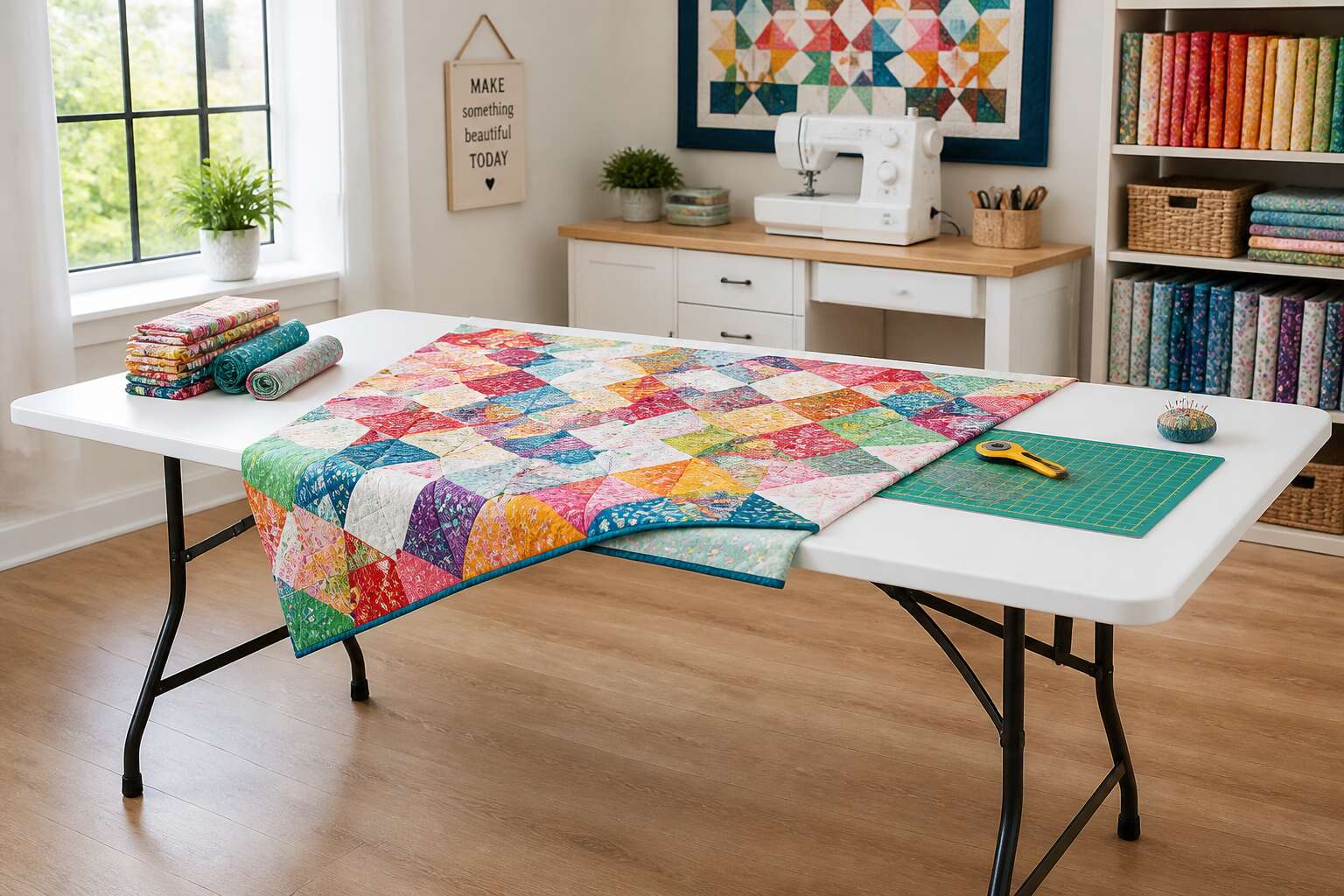
Key Features to Look For in a Folding Quilting Table
Adjustable Height Mechanisms for Comfort
An adjustable height mechanism is the difference between a pleasant afternoon and a stiff neck. Quilters in South Africa often work for hours, and a folding quilting table that cannot adapt to your posture forces you into awkward positions. The best tables use pneumatic lifts or gas struts. These allow smooth transitions with a single lever. Others rely on locking pins, which are sturdier but require more effort.
Consider how the height range matches your needs. A good mechanism covers at least 15 centimetres of travel. Test the stability at every level. Wobbly locks defeat the purpose. Also check the release mechanism, it should sit within easy reach, not behind the table leg. Common mechanisms include:
- Pneumatic lift: smooth and adjustable.
- Ratchet system: precise but slower.
- Locking pin: reliable and budget friendly.
Built-In Storage Pockets and Ruler Guides
The most overlooked feature on any folding quilting table is storage. A flat surface alone does not make a workspace. Fabric, rulers, scissors, and thread need homes within arm’s reach. A table that forces you to stand up for every tool breaks your rhythm and your concentration.
Built-in pockets solve this problem. Look for deep, reinforced fabric pouches along the sides or front edge. These should hold scissors upright and pattern pieces without sagging. Some tables include mesh pockets that let you see contents at a glance, while others offer zippered compartments for smaller items like needles and pins.
– Side pockets for rulers and long tools
– Front slots for current pattern pieces
– Zippered sections for small notions
– Elastic loops for scissors and marking pens
A recessed ruler guide is another critical element. This is a channel or groove set into the table’s surface. It holds your straight edge firmly in place while you cut. This prevents the ruler from slipping, which means cleaner cuts and fewer ruined strips. The guide should be positioned so you can reach it comfortably from your seated position, and it must be deep enough to grip the ruler without catching fabric underneath.
When a folding quilting table combines these features, it becomes more than a work surface. It functions as a complete station. Every tool stays close, and every cut stays precise. For quilters in South Africa dealing with limited space, this efficiency is worth the investment.
Non-Slip Tabletop Surfaces for Precise Cutting
Fabric moves. It slides under pressure, scrunches without warning. A cutting mat loses its grip when the surface lacks friction. The tabletop itself must resist that shift. Treated wood and silicone surfaces hold woven material, so each rotary cutter stroke follows your intended line.
Some folding quilting table models offer a matte finish that resists both moisture and shifting. Others use a cork overlay, which grips fabric naturally without static. Consider how the surface interacts with your iron. A heat resistant top adds safety, and what a difference that makes in a studio! I’ve found that a textured laminate performs best in humid coastal homes.
Precision requires stillness. When your folding quilting table has a surface that rejects movement, your hands focus on the ruler and blade. This gives a cleaner edge and less waste. For quilters in South Africa, a non-slip top prevents slips that ruin strips.
Casters and Portability for Easy Moving
A folding quilting table with casters changes your relationship with your workspace. You can roll it from the machine to the ironing board without lifting a corner. That convenience disappears when the wheels refuse to cooperate.
The casters matter more than most people realise. Hard plastic skids on smooth tiles. Rubber grips better but can leave marks. Locking mechanisms vary. Test them before you commit, because a table that drifts mid-cut is a table that ruins fabric. Even during load shedding, good wheels stay mobile.
Here is what to check:
- Do the brakes engage with one press of the foot?
- Can you replace the wheels when they wear out?
- Does the table wobble once locked?
A folding quilting table with dependable casters will move when you want it and stay rooted when you don’t. The right wheels make the whole piece feel lighter. The wrong ones turn every project into a wrestling match.
Locking Hinges and Stability Locks
A folding quilting table that folds but refuses to stay folded is a Jack-in-the-box with a grudge. The locking hinges decide whether your workspace collapses mid-project or stands firm during a bout of aggressive ironing. Look for metal hinges with a positive click, not the flimsy plastic kind that wear out after a month. Stability locks, the unsung heroes, keep the legs from performing an unexpected jig.
- Test the lock with one hand while the table is loaded.
- Check for a secondary safety latch on the folding mechanism.
- Confirm the lock engages with a solid sound, not a hopeful squeak.
Quality locks on your folding quilting table mean you focus on the seam, not the sway. A table that rocks is a table that sabotages your quilting.
Space-Saving Benefits for Your Sewing Room
Maximizing Small Apartments and Craft Nooks
In a typical South African flat, floor space is a luxury. A permanent cutting table eats up room you simply do not have. That is where a folding quilting table changes the equation. It collapses flat, freeing your floor for other tasks. You can tuck it behind a door, slide it under the bed, or lean it against a cupboard wall.
Small craft nooks benefit the most. You get a solid work surface when you need it, and an empty corner when you do not. The footprint disappears in seconds, which means your dining room can return to being a dining room. This is not about storage pockets or wheels. This is about reclaiming the square metres you already own.
I have seen sewists in cramped Johannesburg apartments squeeze an entire hobby into a hallway. A practical folding quilting table makes that possible without permanent sacrifice.
Creating a Temporary Cutting and Piecing Station
Your sewing room floor has competing demands. A folding quilting table creates a temporary cutting and piecing station that exists only when you need it. You unfold the legs, lock the surface, measure your fabric, and cut cleanly. When the pieces are ready, you fold the table flat and lean it against the wall. The space returns to its empty state.
Guests arrive on Friday. The table slides behind the curtain or under the bed frame. No clutter remains.
- Cut a full quilt block on a stable platform.
- Fold the frame flat and store it in a narrow gap.
- Reclaim the floor for an ironing board or a child’s play mat.
This is how a single room becomes a workshop, a guest room, and a dining area in the same week.
Multi-Purpose Use Beyond Quilting Projects
The folding quilting table earns its place in a sewing room by asking for nothing when idle. It leans against the wall, takes up less floor space than a stack of magazines, and waits. I have seen this make the difference in South African homes where the dining room doubles as a study and the spare bedroom hosts visiting family.
Beyond quilting, the same folding quilting table becomes a pressing surface for dressmaking, a flat area for wrapping gifts, or a temporary desk for school projects. The surface holds a laptop, a cutting mat, or a tray of paint without complaint. In many households the list of uses grows longer:
- A buffet table for a weekend braai
- A craft station for children
- A wrapping bench before market day
Setting Up and Breaking Down in Minutes
In a South African sewing room, every square centimetre works for a living. A folding quilting table sits collapsed against a wall when not in use, taking up no more floor space than a laundry basket. That slim profile keeps the room open and airy, even with cutting mats and fabric bolts stacked nearby.
Setting up takes under a minute. You unfold it, lock the legs, and the surface is level for piecing or pressing. Breaking down moves in reverse, and the ritual becomes habit within a week. When homework or supper claims the room, the table returns to its corner without protest. No hinges jam, no catches stick, and the whole motion happens before the kettle boils.
Choosing the Right Size and Height
Measuring Your Available Workspace
Choosing the right dimensions for a folding quilting table starts with measuring your available workspace. I always measure the length and width of the intended area, then subtract at least 20 centimeters for clearance when moving around. For height, consider the top of your hip bone, as this allows your elbows to rest at a comfortable angle. The folding quilting table should match your existing seating and cutting habits, not the other way around!
Before you commit to a model, test the layout with objects:
- Clear the floor and use painter’s tape to outline the table’s footprint.
- Sit in your usual chair and simulate cutting motions with your arms.
- Open nearby drawers and doors to confirm nothing blocks them.
This process reveals whether a compact or extended surface fits your daily rhythm. Many South African homes have irregular corners, so a folding design lets you adapt without sacrificing floor space.
Ergonomic Height for Seated Work
Your body knows the right height before your tape measure does. A folding quilting table that sits too low forces your shoulders to hunch, while one that is too high turns every seam into a strain. For seated work, the ideal surface allows your forearms to rest parallel to the floor, with your feet planted firmly.
Consider the thickness of your cutting mat and any rulers when calculating the final height. The mat adds a layer that changes the effective surface level. A table that measures 74 centimeters often suits average chair heights, but your personal proportions matter more than a standard number. The folding quilting table should sit at a height that feels neutral, so you can focus on the fabric rather than your discomfort.
- Measure from the floor to your elbow while seated
- Subtract the height of your cutting mat
- Adjust with a cushion or footrest if needed
This measurement ensures the table supports your rhythm rather than interrupting it.
Adjustable Heights for Standing Use
Your back does not care about the colour of the fabric. It cares about the height of your folding quilting table. For standing use, the surface should land just below your elbow, with your arm bent at a relaxed angle. Most fixed height tables miss this mark by ten centimetres or more.
- Stand tall with your shoulders relaxed.
- Place both hands flat on the surface.
- Check that your elbows rest at roughly 90 degrees.
If your table fails this test, look for height adjustable models. Size matters here too. A compact 75 by 90 centimetre surface suits small quilting corners, but a longer layout prevents fabric from pooling on the floor. Match both measurements to your body, not the numbers on the box.
Drop-Leaf Extensions for Larger Quilts
The market is full of folding quilting table options that fold down to the size of a disappointed sandwich. Do not be seduced by portability alone. A table that cannot accommodate a half-finished king sized quilt is merely a very expensive lap tray. Measure the actual dimensions of your typical project before you measure anything else. Then consider how much floor space you are willing to sacrifice. These two numbers will rarely agree.
Drop-leaf extensions solve this standoff with mechanical grace. They add critical centimetres when you need them and disappear when you do not.
– Check that the leaf hinges are sturdy enough for repeated folding.
– Confirm the leaf locks into place, not merely rests on a whim.
– Ensure the extended surface is level with the main tabletop.
A well designed drop-leaf system turns a compact folding quilting table into a proper workhorse, no matter the quilt’s ambition.
Weight Capacity and Load-Bearing Limits
Choose a folding quilting table by matching its surface to your cutting mat and your body. A table that suits 170cm might frustrate someone who is 155cm. Measure from elbow to floor while seated, and compare that to the table’s height range. The right size lets you reach the centre without leaning.
Weight capacity matters more than the number of casters. Check the load limit before you stack fabric rolls, a cutting mat, and a heavy rotary cutter on the surface. A lightweight table may wobble once you apply pressure. The best folding quilting table carries its load evenly across the frame.
- Confirm the weight rating includes the table’s own frame, not just the top.
- Test the table with your heaviest fabrics and tools before committing.
- Check that the legs and locking hinges share the load evenly.
Material and Durability Considerations
Solid Wood, MDF, and Aluminum Frame Options
Choosing the right material for a folding quilting table is a decision that lingers. Solid wood delivers a reassuring weight and a classic look, yet it can be heavy to lift and prone to dents. MDF offers a smoother, lighter alternative, one that handles moisture better than you might expect. Aluminum frames, on the other hand, excel at reducing overall weight while providing excellent structural rigidity.
In South Africa’s varied climates, aluminum resists rust and stays reliable near coastal breezes. Inspect how the frame attaches to the tabletop. Screws and brackets should be robust, not glued. Every repeated setup comes down to these material choices. A folded table with a timber surface and a metal skeleton often proves the most practical companion for serious quilting sessions.
Surface Finishes That Withstand Rotary Cutters
The surface of a folding quilting table takes the brunt of your rotary cutter. A self-healing cutting mat protects the tabletop, but the finish beneath matters too. Laminated surfaces resist scoring better than raw timber. A melamine coating handles repeated passes without leaving permanent troughs.
Consider how a finish reacts to blade pressure. Hard acrylic layers distribute force across the board. Soft varnishes, by contrast, chip and reveal bare fibreboard underneath. South African humidity can warp unprotected surfaces, so sealed edges are worth checking before you buy.
A quality folding quilting table should pair a smooth laminate with a replaceable cutting mat. The mat absorbs blade wear while the surface stays intact. Inspect the seam where the mat meets the frame on a folding quilting table, since gaps invite skipped cuts and fabric snags.
Scratch and Stain Resistance Over Time
Every folding quilting table shows wear over time. Scratches from rotary cutters and stains from misplaced basting spray appear within months. Density matters most. An 18mm MDF core absorbs less moisture than a 12mm particleboard core. Laminated surfaces with a textured finish hide micro-scratches better than glossy ones.
One durability test ran 1000 passes with a dull blade. A polyurethane top showed shallow marks. A painted surface chipped through to the substrate. Stain resistance depends on the seal. Fabric dye seeps into any unsealed edge. Scratches collect thread lint and dust. Cleaning with a damp cloth keeps the surface visible, but does not restore it. The best folding quilting table uses a replaceable top layer. That way, wear hits the mat, not the table’s core. After two years of weekly sewing, the surface shows it.
Frame Construction for Long-Term Stability
The folding quilting table that stands firm today can become a wobbling mess within a season. Stability begins with the frame. Steel legs with a powder coated finish resist flex. Aluminum is lighter but bends under heavy pressure. Cross braces matter. An X frame underneath transfers weight better than a single center bar.
Hinge points matter too. Thin stamped metal locking mechanisms loosen. A solid steel pin with a nylon bushing holds its position. Check the rivets. More rivets distribute stress.
- Frame tubing thickness: at least 1.2mm.
- Leg gussets: welded, not screwed.
- Feet: wide and rubber capped.
A stable frame protects the tabletop from twisting. That matters for a folding quilting table. If the frame relaxes, the top surface distorts. Your rotary cutter follows a crooked line. The best tables use a bolted steel frame with a tension rod. No plastic joints.
Setup, Storage, and Maintenance Tips
Caring for Folding Mechanisms and Hinges
The quiet ritual of unfolding your work surface is where a project truly begins. To preserve the seamless transition from storage to creation, always perform a dry run of the full setup before introducing fabric or tools. This allows you to feel for any resistance in the mechanism before pressure is applied. A deliberate, smooth motion protects the delicate alignment of the hinges and keeps the extension leaves level with the main body.
When it comes to storage, environmental factors are the silent adversary of your equipment. Avoid leaving the table in a damp garage or a sun-scorched patio where humidity can warp the wood and heat can dry out the lubricants. A temperate, indoor space is the safest haven for your folding quilting table.
For the longevity of the moving parts, a little attention goes a long way. The metal pivot points deserve a quarterly check and a light application of silicone-based lubricant. This routine prevents the metallic squeal of friction and keeps the action feeling buttery.
– Wipe down the hinges with a dry cloth to remove dust and lint before applying fresh lubricant.
– Tighten any loose screws gently, as over-torquing can strip the threads.
– Inspect the locking pins for wear and tear, ensuring they seat securely each time.
Beyond the mechanics, prevention is about mindfulness. Never force a fold if the table resists, as this signifies a misalignment that needs gentle correction. Keeping the surface free of debris also prevents grit from grinding into the joints. With these deliberate habits, your table becomes a dependable companion, ready for every creative flourish.
Leveling Feet and Caster Lock Maintenance
An uneven floor will ruin a precise rotary cut. The leveling feet on your folding quilting table exist to counteract this, yet many users never adjust them after the initial setup. Placing a hand on each corner and pressing down reveals any rock. If the table moves, spinning the leveling foot until it sits solid removes the wobble. This also reduces strain on the caster locks, which work hardest when the table is stationary.
Caster locks deserve the same attention. Thread and lint accumulate around the brake mechanisms, and a quick blast of compressed air or a wipe during each clean up clears them! The locking lever should click firmly into place. I have seen caster locks fail within a year simply because thread wrapped around the brake spring. When the lever feels loose, the internal spring has shifted and a simple replacement costs less than a new table. For a folding quilting table kept in a garage or study, these points warrant a monthly look, especially before a long sewing session.
Storing Flat to Prevent Warping
A warped tabletop turns precise cutting into guesswork. The folding quilting table stays true only when stored flat. During setup, always engage all locks before pressing down. If you notice a rocking surface, adjust the feet first. For storage, lay the folded table on its back, never on an edge. This simple habit prevents the frame from twisting.
- Store away from direct sunlight.
- Place on a level floor.
- Keep the latches engaged.
Humidity changes affect the tabletop material, so avoid damp garages. Check the flat surface every few months by placing a metal ruler across each section. Any gap means the frame needs attention. It deserves this small effort.
Carrying Cases and Protective Covers
Your folding quilting table deserves a carrying case that matches its craftsmanship. A padded sleeve protects the edges during transport, while a breathable cover prevents dust buildup at home. During setup, placing the cover flat beneath the table saves your floor and keeps the underside clean while you engage the locks.
Storage requires ventilation. A sealed plastic bag traps moisture, especially in coastal humidity, so cotton or canvas works better. Maintenance follows naturally. The frame should be wiped dry before folding. Zips and straps deserve checking each season. Consider these options:
- Padded nylon sleeves for everyday portability
- Hard-shell cases for long trips to quilting retreats
- Reusable cotton covers for dust-free home storage
Covered properly, this table will remain true and stable for decades.
Quick Assembly Routines for Spontaneous Projects
A quilting impulse rarely arrives on schedule. The folding quilting table rewards those who keep their assembly routine rehearsed. I keep mine within arm’s reach of the cutting mat, not buried behind winter coats. That arrangement saves me fifteen minutes every time!
Develop a three-step ritual:
1. Unlatch both side locks first.
2. Drop the legs and press the centre brace until it clicks.
3. Wipe the surface once with a dry cloth.
Storage feeds spontaneity. Hang the folded table on a wall hook, or lean it against the skirting board so nothing blocks your path. Monthly, check the hinges for grit. A silicone spray on the pivot points keeps the folding quilting table swift to deploy, which matters when inspiration strikes at odd hours.
Cleaning Fabric Fibers, Adhesives, and Debris
My folding quilting table collects fabric fibers like a magnet. Every rotary cut leaves a fine dust that settles into the hinge channels. I keep a stiff brush near the cutting mat, not for the tabletop, but for the crevices. A quick sweep before folding prevents fibers from jamming the locks.
Adhesives are another matter. Spray adhesive residue builds up on the surface and attracts lint. I use a damp cloth with a drop of dish soap, then dry immediately. For stubborn glue, a plastic scraper works better than anything metal.
- Check the pivot points monthly for debris.
- Wipe the underside where dust collects unseen.
Storage matters too. I lean my folding quilting table against the wall in a dry room. Moisture warps the frame and makes the locks stick. Keep it away from radiators and direct sunlight. A clean, dry environment extends the life of every moving part.
Folding Quilting Table vs. Permanent Sewing Station
Cost Comparison Over Time
Most dedicated sewing rooms demand a permanent station, and the expense goes beyond the wood and screws. In Johannesburg, a square meter of floor space can cost thousands of rands per year. That fixed footprint is a recurring fee that never appears on a receipt. A folding quilting table avoids that charge, collapsing into a cupboard when the project is done.
Consider the full lifecycle. A permanent station requires installation, custom wiring for lighting, and modifications to the room. A folding quilting table needs only a clear wall and two hands.
– Upfront cost for a solid folding table: R3,000 to R8,000
– Permanent station materials and labour: R15,000 to R40,000
– Annual space cost of a 2 square meter station: R2,400 or more in urban areas
Over five years, the folding quilting table costs less than half the permanent option, even with occasional replacement parts.
Flexibility for Multi-Hobby Rooms
A room in Johannesburg rarely serves one purpose. The same floor that hosts a quilt on Saturday must accommodate a home office by Monday and a dinner table by evening. A permanent sewing station claims that floor forever. A folding quilting table releases it.
Multi-hobby rooms demand negotiation. The quilter needs 120 centimetres for a king-size top. The rest of the household needs that same space for yoga, model trains, or homework. A folding quilting table shifts position, slides against a wall, or folds into a cupboard entirely.
– Angle the table toward morning light for accurate colour matching
– Push it flush to the wall when guests arrive
– Collapse it completely for a cleared floor in minutes
A permanent station occupies and insists. The folding quilting table obeys the rhythm of the household.
When a Dedicated Permanent Table Makes More Sense
I have seen both worlds in my sewing room. A permanent sewing table stands solid as a promise. But for many quilters, a folding quilting table delivers enough stability for precision work. Yet there are times when a dedicated permanent station is the wiser choice. When you quilt every single day, the ritual of setting up and breaking down becomes a thief of time. A permanent table saves those precious minutes. It also provides a constant surface for ongoing projects, with rulers and mats left untouched.
– When your workspace is used exclusively for quilting
– When you have a full 120 centimetres of available floor
– When you suffer from shoulder or back pain that demands a fixed ergonomic height
The permanence also supports heavier cutting mats and machines. A folding quilting table cannot match the sheer mass of a solid wooden bench. That mass absorbs vibration and keeps seams precise. Choose the folding table for versatility. Choose a permanent station for devotion.
Sturdiness and Vibration Damping Differences
When you press a rotary cutter through three layers of fabric, the table should not shiver. A permanent sewing station, with its sheer mass, absorbs that shock like a boulder. A folding quilting table, by design, has joints and hinges that introduce a small amount of flex. The question is whether that flex ruins your seam allowance or simply reminds you that the table is portable.
Vibration damping is where the two diverge most sharply. A heavy steel frame and a solid wood top on a permanent station eat up the hum of a long-arm machine. A folding quilting table uses a lighter aluminum or MDF top, so you feel a faint tremor during high-speed piecing. In practice, this matters less for hand quilting but becomes noticeable when you pair the table with a heavy domestic machine.
Here is the practical difference in structural soundness:
– A permanent station relies on gravity and weight, so it never walks across the floor.
– A folding quilting table relies on locking hinges and cross-braces, so it stays put but transfers more vibration to the floor.
– The permanent option supports a 20 kilogram machine without a wobble; the folding option needs a reinforced center bar.
For most quilters in a shared living space, the folding quilting table delivers enough rigidity for precise work. You just have to accept that it will hum a little. That hum is the trade-off for being able to pack the whole studio into a cupboard by nightfall.


0 Comments