Understanding Napkin Fabrics and Sizing
Choosing the Right Fabric for Crisp Creases
>
On a humid South African evening, the wrong cloth turns folding table napkins into a wrinkled miss. I watched a satin napkin go splayed during a family meal, and that night I changed to the trustworthy cotton sateen.
For that, choose this:
- 45 cm square for evening duty
- 55 cm square for larger folds
- 65 cm for ornate sculpture
A dense weave is the main secret. Loose fabrics will let a crease escape after two hours. Damask linen is great, but the pure cotton sateen offers a firm press. Wash it once to remove factory sizing, then press with heat. That will make folding table napkins a small victory instead of a struggle.
Standard Sizes and How They Affect Fold Complexity
Here is the article section on napkin sizing and fold complexity, written to your specifications.
—
Some hosts spend hours perfecting a single fold, only to watch the entire design collapse into a sad, crumpled mess before the first course is served. The culprit isn’t always technique; it’s often the dimensions of the linen itself. Size dictates everything about what your folding table napkins can achieve, from a simple pocket to an elaborate peacock tail.
The standard square remains the industry workhorse for a reason. Sticking to a 45cm square serves a practical purpose; it handles a basic envelope fold flawlessly without overwhelming the place setting. However, this size hits its limit quickly. If you attempt a complex structure requiring multiple layers, the fabric bunches up and creates an uneven base. Guests notice that asymmetry. It disrupts the clean lines of the tableware.
For more ambitious designs, the larger 50cm to 55cm square is the sweet spot. This dimension offers a critical advantage: enough material to create height and volume while still maintaining a proportional footprint. It allows you to execute the fan or the rose without the base becoming too thick. The extra fabric ensures the final piece stands upright confidently, holding its shape from the first toast to the last bite.
Here is a quick guide to matching the size to your ambition:
1. 45cm: Best for casual dinners and functional buffets. Opt for a simple fold that rests flat.
2. 50cm: The versatile choice. Handles intermediate folds like the crown with minimal fuss.
3. 55cm: Reserved for formal occasions and complex sculptural folds. Provides the necessary surface area for tall displays.
Yet, even with a larger square, the final result hinges on starch and weight. A lightweight fabric in a large size becomes unwieldy; it folds but doesn’t crease. Conversely, a heavy fabric in a small size becomes a brick, impossible to shape delicately. The interaction between the cloth’s weight and its surface area is the defining factor. You must match the fabric’s drape to the size’s potential. Otherwise, you are fighting the material, and the material will win.
Ultimately, the perfect napkin size is the one that disappears into the background, serving the design rather than fighting it. A correctly proportioned square turns folding table napkins into a manageable, efficient process. When the dimensions work, your creation looks effortless. When they don’t, you are left with a pile of wrinkled cloth and a table that looks unfinished.
Starching and Pressing Techniques
Starch is the secret scaffolding behind a stunning fold. A cloth can be sized perfectly, but without a stiff finish, it sags mid-arrangement. I learned that pressing alone is not enough. A single pass in a dryer won’t build the surcharge. You need a two-part system: dampen, then press.
My routine helps others set it fast:
- Spray with a light starch solution from a foot away.
- Iron the surface slowly, letting the cloth dry flat.
- Keep the napkin session in a clean cloth until service.
This treatment gives the fabric a track. It holds a fold that freezes in place, allowing your peacock tail to survive four hours on a pre-dinner table. Bear in mind that you must press each seam as you go. The crease sticks to a dry cloth twice later. For professional hosts, this edge is what turns a simple guest into a folding table napkins artist.
Five Foundational Folds for Everyday Dining
The Classic Pocket Fold
The classic pocket fold is the simplest reliable shape in table setting. When folding table napkins at home, this technique offers the most dependable way to create an upright envelope that holds cutlery, a menu card, or a sprig of rosemary. I have used it often, and it never fails to create order!
The beauty of the pocket fold lies in its geometry. After pressing the fabric into thirds, you fold the bottom edge upward to create a deep pouch. The result is a sturdy, self-supporting shape. It works best with the starchy napkins we discussed earlier, but it forgives a softer weave if you work slowly. Once mastered, folding table napkins takes little time. Use it for:
- A formal Sunday lunch with roast meats
- A casual braai where guests hold their plates
- A buffet table where space is tight
The Diamond Fold
The Diamond Fold transforms a square of linen into a four pointed star, a quiet flourish that catches candlelight and curiosity. Unlike the pocket fold, which builds upward, the diamond works with diagonals. You bring opposite corners to meet, then fold again to create a layered triangle with open edges that fan outward. The result is a shape that stands alone on the plate, demanding no cutlery to hold its form. It is a confident choice for folding table napkins when you want the fabric itself to be the centrepiece.
This fold shines with a medium starch. Too stiff and the points crack; too soft and they slump. When folding table napkins for a dinner where plates carry the main course, the diamond offers visual relief. The exposed layers catch the eye before the food arrives. The final fold creates a small pocket at the base, perfect for a single freesia stem or a handwritten name card. Use it for:
A long table on a summer evening
A fish course served on dark ceramic
A gathering where guests sit before the meal
The geometry rewards precision. Ensure the seams of the napkin sit at the back so the front shows only clean planes. When folding table napkins with a patterned fabric, the diamond displays the design in segments, creating a mosaic effect. Practice the fold twice with a warm iron and the motion becomes second nature. I have found that the diamond fold changes the energy of a table. It asks for attention. It gives it back in the quiet architecture of pressed cotton.
The Silverware Roll
The silverware roll is the practical option. It keeps the fork from sliding onto the floor before the soup arrives. Place the cutlery on the lower third, fold the sides inward, roll upward, and tuck the corner into its own fold. No starch, no precision, no drama.
As a foundational fold in the world of folding table napkins, it earns its place because it is fast and forgiving. Any fabric that does not resist works. Use the roll for:
- Buffet lines where guests serve themselves
- Outdoor eating where a breeze could scatter cutlery
- Kitchen to table trips without a tray
The only risk is that a guest will unwrap the roll to inspect the cutlery. Let them. The fork stays where it belongs.
The Single Point Fold
The single point fold demands a clean diagonal and a complete lack of ambition. Start with a square napkin, fold it corner to corner, then turn the long edge up a third. The result is a triangle with one apex, which is why it is a staple of folding table napkins.
This fold does nothing. It does not cradle cutlery. It does not hide a menu card. It breaks the flatness of a plain plate. That makes it perfect for a braai or a Sunday lunch where the food is the main event.
For the undecided host, the single point is the fastest route from laundry basket to table without looking like you threw the napkin down. It is geometry with a good outcome.
The Buffet Napkin Fold
Forget the stiff, formal towers of yesteryear. The true art of folding table napkins lives in the practical, everyday gestures that bring a sense of occasion to a simple dinner. We have already covered the classics, from the diamond to the silverware roll. Now, we shift our focus to the foundational folds that serve as the workhorses of a well-dressed table, techniques that are both simple to master and surprisingly versatile.
These aren’t just about aesthetics; they are about functionality and creating a specific mood. Whether you are hosting a casual braai or a more structured dinner party, the right fold can set the tone without feeling pretentious. Here are a few foundational techniques to add to your repertoire:
– The Envelope Fold: This is the gold standard for a clean, tailored look. It creates a neat pocket, perfect for holding silverware or a sprig of fresh rosemary.
– The Fan Fold: This technique introduces a playful, dynamic element. It adds height and a touch of whimsy, making it ideal for a summer lunch or a relaxed gathering.
– The Double Point: A slight variation on the classic, this fold creates two symmetrical peaks. It is a simple way to add a bit of visual interest while remaining understated and elegant.
Mastering these few foundational folds will elevate your table setting from ordinary to memorable. They provide a simple, tactile way to show your guests you care about the details, transforming a pile of linen into a welcoming statement.
Intermediate Techniques to Elevate Your Table
The Pyramid Fold for Modern Place Settings
Napoleon supposedly despised the pyramid fold, finding its resemblance to the monuments of his conquered territories a touch too on the nose. History is silent on whether he ever just wanted to unfold it and eat his bread. Yet, beyond the imperial anecdote, mastering the pyramid fold is a genuine rite of passage in the world of folding table napkins.
The technique itself is a mathematics lesson in disguise. You are not merely pleating cloth; you are constructing a stable, three-dimensional object. The process requires a precise initial triangle, followed by a series of symmetrical folds that must interlock with exacting pressure. A sloppy fold here results in a lopsided monolith that suggests a lazy afternoon, not a refined tablescape. The reward for this precision is a commanding presence. It stands tall, a stark geometric statement that makes a modern place setting feel deliberate and architectural. For the host looking to create an impactful, minimalist aesthetic, this is the definitive move.
The Fan Fold for Visual Impact
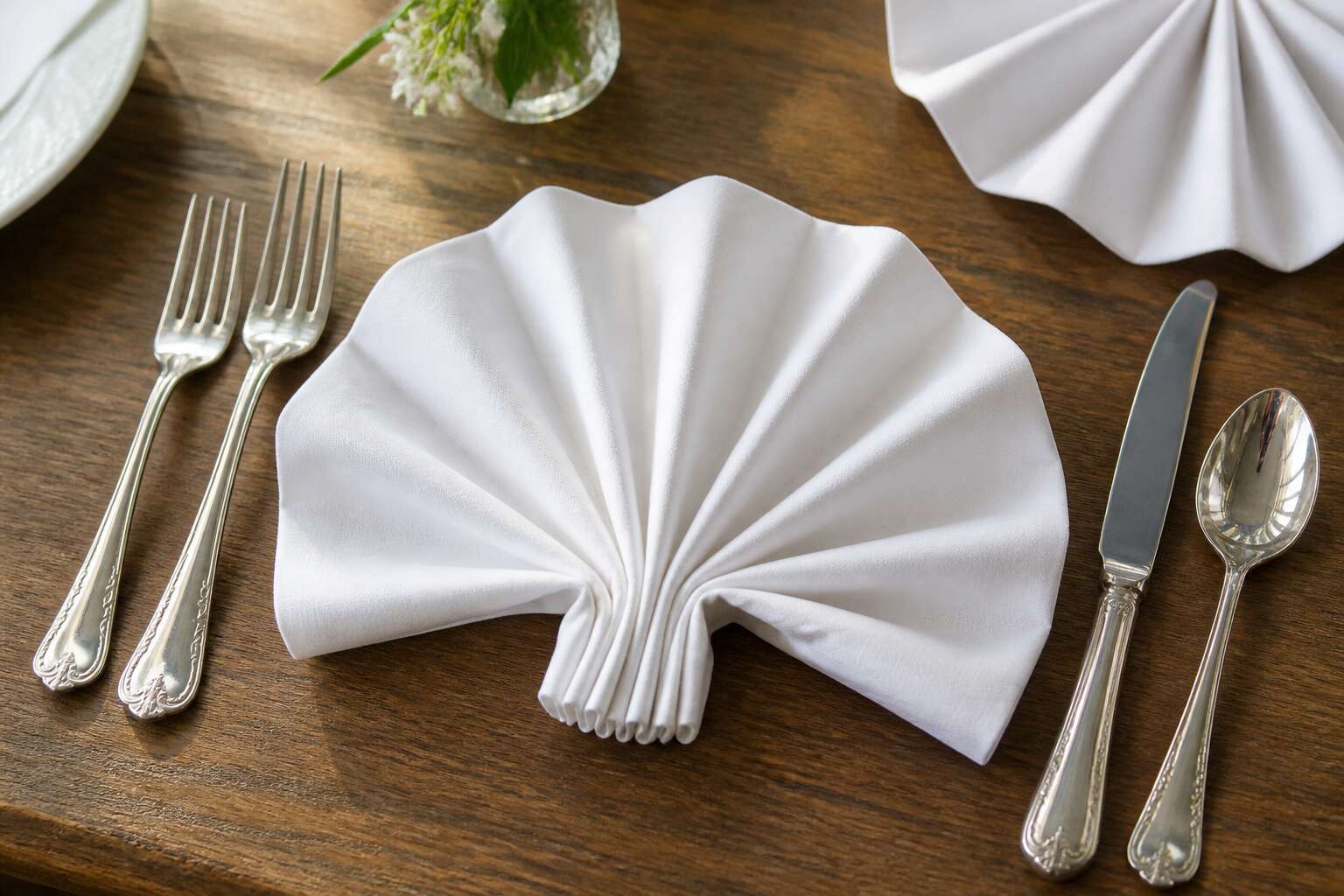
The peacock is nature’s great showman, and its fan is a display of pure theatre. The fan fold for table napkins channels that same spirit of dramatic unveiling, transforming a simple piece of linen into a statement of exuberant welcome. This technique is less about rigid geometry and more about capturing a sense of rhythm. The folds catch the light in a cascading pattern, creating a visual echo of a hall of mirrors.
The technique begins with an accordion fold, but the true skill lies in the final tuck. You are not crushing the material; you are gathering it with a gentle, decisive hand. The base of the fold keeps it stable, while the top flares open naturally. The most striking results appear when you use a stiff fabric that holds its shape. A simple way to adapt this for different events is to vary the size and style.
– Use a bold, patterned napkin for a vibrant, joyful tone.
– Select a plain linen and place a single flower at the base for understated elegance.
– Create a series of fans down the center of a long table for a festive, communal feel.
The transformation is immediate. A fan placed in a glass or directly on the plate guides the eye and sets a tone of lighthearted celebration. It is a less formal affair, one that invites conversation and a leisurely pace. It makes the act of sitting down feel like the beginning of an event, not just a pause for a meal. The very construction of the fold captures a moment of blasted open potential, a frozen burst of energy that promises a memorable occasion. This is the true power of folding table napkins, to make an inanimate object feel alive with anticipation.
The Rose Fold Featuring Cloth Napkins
The rose fold is the overachiever of the napkin repertoire. It demands cloth that can twist and hold, and it rewards patience with a bloom that lasts through an entire dinner service. The technique is methodical: fold the napkin into quarters, then roll each layer around your finger to create overlapping petals. The trick lies in tension. Too loose and the rose wilts. Too tight and you flatten the fabric into a sad pancake. This is one of those folding table napkins exercises that separates the confident host from the occasional folder.
A few variations worth trying:
1. A square napkin produces a full, open rose.
2. A rectangular napkin yields a tighter bud.
3. Tuck a fresh herb sprig under the base for a garden scent.
Every attempt builds muscle memory. By the third practice rose, you will have a centrepiece that needs no water.
The Bishop’s Hat Fold
The Bishop’s Hat Fold transforms cloth into a vertical, symmetrical silhouette. It is one of those folding table napkins techniques that rewards precision. When the corners align, the napkin stands with a clean, self-supporting form. The method starts with a triangle, then brings the outer points to the centre, creating a band that tucks into itself. The result is a crisp shape.
The final tuck determines the result. Press each layer with your thumb as you work, and the hat holds its structure through a long dinner. For a more assertive look, use a heavily starched square. Softer evenings call for linen.
Consider these adjustments:
- Square napkins produce a taller, more ceremonial hat.
- Rectangular napkins yield a shorter, wider profile.
Your practice of folding table napkins becomes a study in balance.
The Lotus Fold
Some napkin folds require nothing more than confidence and a steady hand. The Lotus Fold, however, demands forgiveness from your fabric. This layered technique mimics a blooming flower and rewards a relaxed grip. Tightness is the enemy.
The process starts with a square folded into quarters. You lift each layer individually, coaxing the corners upward into petals. Your success with folding table napkins depends on the fabric. A larger square creates a more dramatic bloom.
- Starched fabric holds its shape but resists the pull.
- Linen drapes softly and produces a natural, organic flower.
- Cotton offers a middle ground with moderate structure.
The final form works as a centrepiece. It also survives a long dinner, provided nobody mistakes it for their bread roll.
The Twist Fold with Cutlery
Some folds are decorative. The Twist Fold with Cutlery does the real work. It wraps the knife and fork in a single roll that supplies the table with one piece instead of two separate parts. Set the square napkin in a diamond, position the cutlery on the lower half, fold the base over the handles, and roll forward with a firm spiral. The coil becomes the place setting in seconds!
Fabric decides how many turns you need. I prefer cotton for this roll; it holds the twist firmly. Linen allows for a final turn.
- Place the cutlery near the base edge.
- Fold the point over the handles.
- Keep rolling with a steady hand.
The bundle rests beside the plate. Folding table napkins this way becomes part of the meal preparation, and the guest untwists one turn to find the cutlery ready.
Advanced Folds for Weddings and Holiday Gatherings
The Swan Fold for Elegant Occasions
The Swan Fold turns a square of linen into a creature of poised silence. At a wedding banquet or a midwinter feast, this fold draws the eye up from the plate with its curved neck and billowed wings. The silhouette holds candlelight itself. I have watched it transform place settings into something ceremonial. For those who craft dinners with gravitas, the swan suits moments demanding stillness.
Achieving the shape requires patience. You start with a sharp diagonal, then tuck and roll the wings until they settle. The neck rises last, a gentle crimp that keeps its curve through the entire meal.
Consider the settings that suit this fold:
- A long table under dim chandeliers
- A plate beside a frosted window
- A centerpiece that refuses to fade
Folding table napkins into this shape gives the table a ceremonial stillness. The swan does not shout. It waits, and its silence fills the room.
The Lily Fold
The holiday table in South Africa carries its own pressure. The braai tongs, the side dishes, the conversation. You need one small victory. Folding table napkins into the Lily Fold provides that win. It requires no special skill, only a bit of patience. The result looks intricate, but the mechanics are simple. You lift each corner to the center, flip the square, and repeat. The final step is pulling the petals from the base. The cloth blooms into a rigid, elegant flower.
This fold works for a wedding reception or a Christmas lunch. It stands upright, which means it holds its shape even when guests are late. Use a starched cotton napkin. The crispness keeps the petals defined. A softer linen will flop, and a floppy lily looks like a sad cabbage.
Consider the setting:
– A table with a bold centerpiece needs a quieter fold
– A plain white plate benefits from the vertical line
– A buffet line gets structure from the repeated shape
The Lily Fold brings order without stiffness. It is a practical choice for hosts who want ceremony without the fuss.
The Crown Fold for Festive Feasts
Somewhere between the second glass of bubbly and the fourth round of speeches, a festive table needs structure. The Crown Fold delivers it with quiet authority. This is not the gentle slouch of a linen blossom. It is a sculptural statement, a tiered stack of crisp angles that rises above the plate like a heraldic emblem. For weddings, where the ceremony can stretch and the champagne flutes grow heavy, this fold holds firm. It gives the eye a place to rest among the chaos of cutlery.
The construction relies on a precise series of folds that create interlocking layers, which is why the choice of fabric matters deeply. A heavy cotton sateen or a high quality damask will hold the sharp ridges without buckling. We are all hoping for a moment of calm. This is the quiet command of the table.
Beyond its looks, the Crown Fold is a utilitarian marvel for the holiday table. It can house a small sprig of rosemary or a single chocolate truffle in its interior pocket without losing its silhouette. It transforms the act of folding table napkins into a preemptive gesture of generosity. This makes it ideal for receptions where guests are seated for hours.
– Christmas Day luncheons
– New Year’s Eve dinners
– Formal wedding breakfasts
– Anniversary celebrations
The repeated vertical lines of the Crown Fold also create a sense of rhythm down a long banquet table. In a candlelit room, the shadows fall differently across each tier, adding depth to the place setting. It is a dignified choice for hosts who understand that etiquette is often a matter of geometry. The fold turns a simple square of cloth into a minor architectural feature, a small monument to the evening ahead.
The Fleur-de-Lis Fold
The fleur de lis has survived centuries on coins, crests, and cathedral doors. As a napkin fold, it becomes a three pointed form standing above the plate. It demands a generously sized square and a steady hand.
For wedding receptions and holiday gatherings across South Africa, this fold reads as more ornate than the Crown Fold without overwhelming the place setting. It holds through long meals if each crease is pressed with purpose. Medium weight cotton with light starch gives the cleanest result.
Consider it for:
- Seated dinners where uniform rows matter
- Buffet tables that need structural variation
- Ceremonial occasions like vow renewals
The entire exercise is a lesson in folding table napkins with precision. Few methods of folding table napkins reward patience so directly. The central petal depends on every prior alignment. One skewed crease collapses the symmetry. A rushed fold shows its flaws within seconds.
The Peacock Tail Fold
Of all the theatrical flourishes in the art of napkin folding, the Peacock Tail is the undisputed showstopper. It foregoes subtlety entirely, offering a fan of pleats that fans out like plumage, demanding attention before a single course is served. While the Fleur-de-Lis stands tall and the Lotus sits quietly, this fold sprawls gloriously across the table, turning a simple place setting into a statement piece.
Crafting this display requires a keen eye for symmetry and a heavy dose of patience. The process involves precise accordion pleats that must be uniform, lest the entire tail appear lopsided and tragic. Once the pleats are set, the napkin is secured and the base is flared open to create that iconic spread. This is one of those folding table napkins techniques that guests will inevitably photograph, so ensure your fabric is starched to a crisp finish to hold the shape. It works wonders at festive gatherings where a bit of drama is welcomed, adding a layer of conversation to the dinner table.
Occasion-Based Napkin Styling Ideas
Spring Brunch Folds
Spring brunch tables deserve the same care you give to a slow-cooked Sunday meal, yet so often the napkin becomes an afterthought. The truth is, spending five minutes folding table napkins transforms a stack of linen into the quiet anchor of the whole setup. When the table is set with fresh flowers and warm pastries, a structured fold signals that the meal was planned, not thrown together.
For a spring brunch, skip the heavy, formal techniques. Instead, embrace the “bird of paradise” fold, which is easier than it looks and brings a leafy, architectural element to the plate.
– Start with a heavily starched square napkin, folded in half diagonally.
– Fold the two outer corners inward to meet at the center point, forming a kite shape.
– Fold the bottom point up, about two-thirds of the way, then flip the entire piece over.
– Take the two side points and fold them inward to overlap slightly, creating the “wings.”
– Flip it back over and pull the two center points apart and downward to form the “beak” and “plume.”
That fold works best with crisp cotton or a cotton-linen blend, because flimsy fabric won’t hold the sharp creases. If you are using a patterned cloth, keep the design on the outer face so the layers reveal the print as the fold takes shape. Pair this with a simple sprig of rosemary or a single viola tucked into the center point for a pop of colour that doesn’t interfere with the geometry.
Another reliable option for a relaxed morning is the “pouch” fold, which holds cutlery like a neat envelope. It is practical, which matters when guests are juggling a plate, a coffee cup, and a conversation. The key to making it look intentional is the starch. A limp napkin will collapse under the weight of the fork, so treat the fabric with a firm spray before pressing.
The lunch-size napkin (about 45 centimetres square) is the right choice here. A dinner napkin, at 55 centimetres, creates a fold that is too tall for the plate, while a cocktail napkin is simply too small for a full brunch plate. When you are folding table napkins for a gathering, consistency in size across the whole stack makes the table look polished without needing a ruler.
The texture matters just as much as the size. A nubby linen adds a rustic charm that suits a farmhouse-style brunch, whereas a sateen finish gives a slight sheen that feels more polished for a mimosa-and-croissant affair. Keep the palette in soft pastels, sage greens, or undyed natural tones to match the season. After the meal, it helps to store the folded napkins flat, loosely stacked, so the creases relax slightly before the next wash, which makes them easier to press again later.
By choosing a fold that matches the occasion, you are not just decorating a table. You are guiding the pace of the meal and giving guests a visual cue that the morning is meant to be savoured. That small moment of structure, paired with good food and good company, is what turns a simple brunch into a proper occasion.
Summer Barbecue and Outdoor Dining Folds
A barbecue should feel relaxed, but that does not mean your table setting needs to be an afterthought. A little structure goes a long way in the backyard. Spending a few moments folding table napkins into simple shapes can instantly elevate a spread of burgers and cold salads into something memorable.
The heat and humidity of a South African summer can be brutal on fabric. Lightweight cotton or a linen blend is your best friend here. Skip the heavy starch; it can become brittle in the sun. Instead, give your napkins a light press and consider the Pocket Fold. This is perfect for holding cutlery, letting guests grab their tools in one easy motion. It keeps the table tidy and prevents a gust of wind from sending a fork flying.
Here is a quick method for the Pocket Fold:
– Fold the square napkin in half to form a rectangle.
– Fold the left side over the right side to make a smaller square.
– Take the top layer of the right side and fold it diagonally down towards the bottom point.
– Flip the entire napkin over.
– Fold it in half from left to right, then tuck the left flap into the pocket created on the right.
For a more laid-back feel, try the Envelope Fold. It is a classic for a reason. Lay the napkin face down. Fold the right and left edges inward so they meet in the middle. Do this again to make a long, thin strip. Then, fold the bottom up about two-thirds of the way and tuck the top down into the pocket. It is sharp, functional, and looks great with a simple sprig of rosemary tucked inside.
The Fan Fold is where you can get a bit more playful. It breaks up the formality and adds a whimsical touch that suits an outdoor gathering. Accordion-fold the napkin into one-inch pleats. Pinch the bottom together and fan out the top. Place it in a glass or on a plate to hold the shape. It adds vertical interest to a flat table, which makes the whole setting feel more alive and dynamic.
Ultimately, the goal is to create a space that feels inviting. The right folds do not just decorate; they solve problems. They hold cutlery, they define place settings, and they show your guests you put thought into their comfort. The effort is minimal, but the impact on the overall vibe of your barbecue is significant. It is a simple, effective way to bring a touch of polish to the great outdoors.
Winter Holiday Centrepiece Folds
A winter table in South Africa offers a different kind of beauty. The light is lower, the evenings close in sooner, and a centrepiece carries more weight. When the braai coals are glowing and the Chardonnay is chilled, the folding table napkins should echo that shift. Thicker linens, perhaps in deep greens or burgundies, bring a sense of warmth that lightweight summer cottons cannot match.
For a festive gathering, consider the Candlelight Fold. It creates a pocket that holds a single taper or a sprig of dried protea. It is a quiet way to add height without cluttering the table with vases or ornaments.
– Lay the napkin face down.
– Fold the top and bottom edges to the centre.
– Turn it over and fold the left and right edges to the centre.
– Carefully pull out the four corners to form a standing square.
– Tuck your candle into the central opening.
This style works particularly well when paired with eucalyptus branches laid flat along the runner. The symmetry of the fold offers a counterpoint to the organic scatter of leaves. It gives guests a clear visual anchor, a small moment of order amidst the festive chaos. The result is a table that feels curated, not contrived, and the effort remains entirely in the realm of folding table napkins, which is exactly where it belongs.
Common Mistakes and Pro Troubleshooting Tips
Avoiding Over-Pressing and Fabric Damage
Over pressing ruins more napkins than any other mistake. Pressure does not create a crease. It creates damage. Heat changes the fiber, and the iron flattens it. One extra second leaves a weak line.
That sheen on a fold is the damaged fiber. It cannot be polished out. It is permanent.
Troubleshooting starts with temperature. Use the lowest heat setting for the material. Test a hem before you press. That single rule prevents hours of rework.
- Using the hottest iron out of haste.
- Leaving the iron face down while adjusting the other side.
- Steaming a dry fold over and over.
- Adding physical force to the press.
A press cloth is the simplest shield. Lay it over the napkin, press once, then lift. Let the cloth cool completely before repeating. Folding table napkins works best when the cloth stays intact and the crease stays sharp.
Matching Fold Complexity to Napkin Size
The sharpest mistake is forcing a complex fold into a small cloth. A bishop’s hat needs at least 50 cm of diagonal linen. On a standard 30 cm dinner napkin, the layers bulge, the seams blur, and the shape falls apart before the first course. This is the core challenge in folding table napkins: always fit the fold to the physical sheet.
Troubleshooting starts with measurement. Read the finished fold, not the cover image. Does the final width fit within the napkin’s diagonal? Does it demand triple folds that pile up too thick? If the structure fights the surface, the issue is size, not skill.
- Check the diagonal of the napkin against the fold’s final span.
- Test a single fold before committing to a full dinner set.
- Keep the heaviest for wide table linens.
Once the fold size and the fabric match, the form holds its lines without extra pressing or repair. Choose a simpler pattern when the cloth runs short, then move to larger sizes if the table allows.
Quick Fixes for Uneven or Lopsided Folds
The lopsided fold is the most common failure in the art of folding table napkins. It happens when the starting point is off by a single centimeter. A corner that is pulled too wide on the first turn creates a ripple that travels through every subsequent layer. The silverware roll turns into a twisted mess. The pyramid becomes a leaning tower. Even a skilled hand cannot compensate for a foundation that was uneven from the start.
The fix begins before the first fold. Align the napkin on a hard, flat surface. Press your thumb firmly at the center point to anchor the fabric. When you make the initial turn, keep your fingers spread wide to distribute tension across the whole surface. If the edge is still crooked on the second pass, undo it and start fresh. Do not wait until the end to correct a misalignment, because the material will only resist the repair.
Pressing the final fold is the key step that disguises a minor imperfection. Use a warm, dry iron on the finished garment to set the shape. The heat does not fix the geometry, but it flattens the bulk and hides the seam. If the fold still wobbles, you may be fighting a stubborn weave or a hem that is thicker on one side. These are quick fixes for uneven or lopsided folds:
- Press the lopsided corner with a damp cloth to soften the crease, then refold.
- Check that the napkin is the right shape, some linens are cut slightly off a perfect square.
- Reduce the number of layers by choosing a simpler pattern for a fabric that is too thick.
A fold that leans sideways is a call to slow down. Rushing the turns, especially on slippery cotton blends, creates a chaotic final shape. The most practical advice is to trust the physical evidence. If the broadest point of the fold exceeds the diagonal of the napkin, no adjustment will save it. When you handle folding table napkins with a steady hand and a watchful eye, the straight lines return. A straight fold catches the light and makes a strong first impression, which is worth the patience.
Pre-Folding and Storage Hacks for Event Prep
Everyone has battled a crooked napkin fold, usually when time is short. It feels like a personal failure, but the real culprit is often preparation. A fold that starts slightly misaligned will only magnify its flaws with every subsequent turn. The trick is to treat the napkin like a canvas, not a piece of paper. You must press it well and ensure the edges are perfectly matched before you begin a single fold.
The goal is quick, reliable results, not geometric perfection. A good fold should be able to withstand being handled and placed without collapsing. If you are folding softer linen, the fabric needs starch to hold a sharp line. For heavier cotton, the structure comes from exact pressure and the way you guide the material with your fingertips. The material should work with you, not against you.
When you encounter a stubborn wrinkle that won’t stay down, use a targeted fix. This solves the problem without redoing the entire napkin.
– Use a small dab of fabric starch on the specific crease.
– For a slipping fold, insert a thin piece of wire into the hem to hold its position.
– If the point is too soft, grab a toothpick to create a gentle support structure.
Professional event stylists never compromise on the foundation. Even the most complex sculptural folds depend on a crisp, square base. Always rotate the napkin rather than stretching it to create a point; stretching distorts the weave and ruins the fabric’s integrity. By mastering these troubleshooting steps, your folding table napkins will maintain their shape from the first course to the last. This attention to detail avoids any napkin folding mistakes and provides a sturdy foundation for any table setting.



0 Comments